Traditional Chinese Medicine Human Body Geometry and a New Rapid Pain-Relief Technique
— A Discussion on the Clinical Application of the 3C Technique in Acupuncture
By Ai Xiaoxin, Journalist for the International Natural Health Association
Dear fellow acupuncturists and friends,
Greetings to you all!
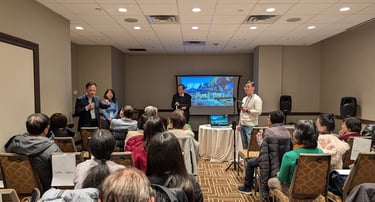
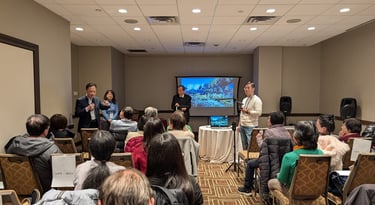
On March 28–29, 2026, a two-day training program on rapid pain-relief acupuncture techniques, together with a seminar on the clinical application of Traditional Chinese Medicine Human Body Geometry, was successfully held at the Sheraton Hotel in Flushing, New York.
This event, organized by the United Alliance of Licensed Acupuncturists of New York State, brought together acupuncture experts, clinical practitioners, and professionals in the field from New York State and around the world for交流, learning, and the sharing of clinical experience.
During the event, several distinguished leaders in the profession attended and offered their guidance, including:
Professor Lin Rongsheng, Vice President of the World Federation of Acupuncture Societies and former President of the United Alliance of Licensed Acupuncturists of New York State;
Professor Chen Jing, former Secretary General;
as well as Dr. Zhang Dechao, among other respected senior figures in the field.
At the conference, Mr. Zhu Weimin, an orthopedic physician in France and a registered acupuncturist in Switzerland, systematically introduced a practical clinical method for pain management: the Cross & Correspondence Technique, abbreviated as the 3C Technique. His presentation sparked strong interest and lively discussion among attendees.
I. A New Clinical Perspective for Observation
Pain is one of the most common symptoms encountered in acupuncture practice.
Traditional Chinese Medicine, grounded in the theory of meridians and the system of acupuncture points, has accumulated an exceptionally rich and valuable body of experience in the treatment of pain.
At the same time, in long-term clinical practice, many practitioners have continued to ask an important question:
Is there a point-selection method that is more intuitive, easier to master, and faster to apply?
It is within this clinical context that the 3C Technique gradually emerged as a new approach.
Its main features include:
using correspondence relationships between different body structures as the starting point;
applying geometric thinking to assist clinical localization;
helping practitioners identify effective treatment points more rapidly.
It should be emphasized that the 3C Technique is not intended to replace the traditional meridian system. Rather, it offers acupuncture clinicians a complementary way of observing the human body through structure, form, and geometric relationships.
II. Theoretical Inspirations: Correspondence Between the Local and the Whole in the Human Body
1. Every Local Part Is Connected to the Whole
What is referred to here as a “local part” may mean:
an entire limb;
a part of a limb;
an even smaller tissue level;
or even a single cell.
According to the theory of Holographic Biology, established in 1983 by Professor Zhang Yingqing, not only does the second metacarpal contain information about the whole human body, but every part of the body—even every cell—may also carry information about the organism as a whole.
In other words, if external conditions allow, each part of the body may in some sense represent the whole.
This idea resonates with the concept of “pan-embryology”, which holds that different parts of the body each contain the potential of the whole.
Twelve years later, the emergence of the cloned sheep in the United Kingdom offered, to some extent, a modern scientific echo of this perspective.
Professor Zhang Yingqing also proposed that every long bone contains information about the entire human body.
If the phalanges of the fingers and toes are also included in this category, then the four limbs together contain 88 long bones.
This means that, in theory, when treating a single disorder, one may be able to identify a large number of potentially effective points simply within the limbs alone.
This observation also helps explain why so many different needling methods continue to emerge in clinical practice:
most of them are, in fact, derived from fragmented clinical observations that gradually evolve into practical techniques.
2. Relationships Between Self-Similar Structures
In nature, some complex systems display a remarkable characteristic:
the parts resemble the whole, and the whole itself contains many similar structures.
Examples include:
the Koch snowflake;
the Sierpiński triangle;
Benoît Mandelbrot’s fractal theory.
All of these models describe the phenomenon of self-similarity.
In other words, a local part contains not only information about the whole, but also information about structures that resemble itself.
This idea bears certain affinities with the holistic view in Traditional Chinese Medicine, as well as with the zangxiang theory (the theory of organs and manifestations).
For example, in the human body:
the upper and lower limbs have similar numbers of joints and bones;
the upper arm and the thigh are each composed of a long bone, with comparable structural features such as a head, neck, and condylar prominences;
the forearm and the lower leg also share structural parallels;
similarly, the hand and the foot show strong morphological resemblance.
These so-called self-similar structures appear to maintain close correspondence relationships, which gives them particular clinical significance.
In pain treatment, such correspondences often have considerable practical value.
3. Projection Relationships May Also Exist Between Dissimilar Structures
Extensive observations from acupuncture practice also suggest that each part of the body contains not only:
information about the whole;
information about self-similar structures;
but also information related to non-similar structures.
For example:
the trunk and the upper limbs;
the trunk and the lower limbs;
the trunk and the head/neck;
are, from a geometric point of view, dissimilar structures.
And yet, in clinical practice, it is often possible to identify on the trunk complete correspondence zones for these different regions of the body.
In other words, even if certain body parts do not resemble one another in shape, they may still maintain functional or therapeutic correspondence relationships.
The deeper mechanism behind this phenomenon remains unclear.
However, this observation opens up greater flexibility and broader possibilities for point selection in clinical practice.
By making use of these various correspondence relationships, it becomes possible, in disease treatment, to identify a greater number of potentially effective therapeutic points.
4. The Core of the 3C Technique: Complete Correspondence Between Self-Similar Structures
It should be noted that among the three types of correspondence described above, the second form—that of self-similar structures—is the strongest, most stable, and most clinically significant.
In other words:
each local part appears to contain the complete information of another structure that is self-similar to it.
When this observation is combined with:
the same-track principle;
and the crossing principle;
it often makes it possible to achieve the fastest and most effective clinical results in pain treatment.
This is precisely the fundamental principle of the 3C Technique.
Its simplicity, speed, and effectiveness often come as a pleasant surprise to clinicians in practice.
III. Clinical Characteristics of the 3C Technique
In practical application, this method generally demonstrates the following characteristics:
a relatively intuitive clinical approach;
flexibility in point selection;
rapid effects in certain pain conditions;
a significant improvement in the effectiveness of pain treatment.
Its methodological core lies in using geometric correspondence relationships to help practitioners assess, localize, and intervene within a short period of time.
IV. Relationship with Traditional Theory
It is important to emphasize that the 3C Technique is, first and foremost, an exploration arising from clinical experience.
From another perspective, it may offer a complementary interpretation of certain foundational ideas in Traditional Chinese Medicine, particularly:
the holistic view of the body;
and the idea of the broad distribution of meridians throughout the organism.
Dialogue and integration between different theoretical perspectives may, in time, contribute to the further development of acupuncture practice.
The emergence of Traditional Chinese Medicine Human Body Geometry and the 3C Technique is therefore not a denial of meridian theory.
On the contrary, these ideas may help illustrate and reaffirm some of the tradition’s core insights, such as:
“Meridians are everywhere”;
“Acupuncture points are everywhere.”
From this perspective:
not confining oneself to a single meridian pathway may, in a sense, be equivalent to drawing upon countless meridians at once;
not limiting oneself to classical acupuncture points may, in a sense, be equivalent to discovering countless potential therapeutic points.
This can make clinical application:
faster;
more effective;
more flexible;
and at times even more fluid and enjoyable for the practitioner.
V. Conclusion
As an approach derived from clinical observation, Traditional Chinese Medicine Human Body Geometry and the 3C Technique still require further refinement, validation, and enrichment through continued practice and systematic study.
Nevertheless, this approach already offers acupuncture practice—and especially the field of pain management—a new and promising perspective.
With the accumulation of further clinical validation and deeper academic exchange in the future, this method may fully demonstrate its value in the field of acupuncture analgesia.
April 6, 2026






Inscrivez-vous à notre newsletter :


Association Internationale de Santé Naturelle
11 Chemin de la Muraz
74520 Vulbens
contact@santemtc.com